A first-time homeowner's guide to plumbing in Ontario
By Petra Vogel · Updated 2026-08-03
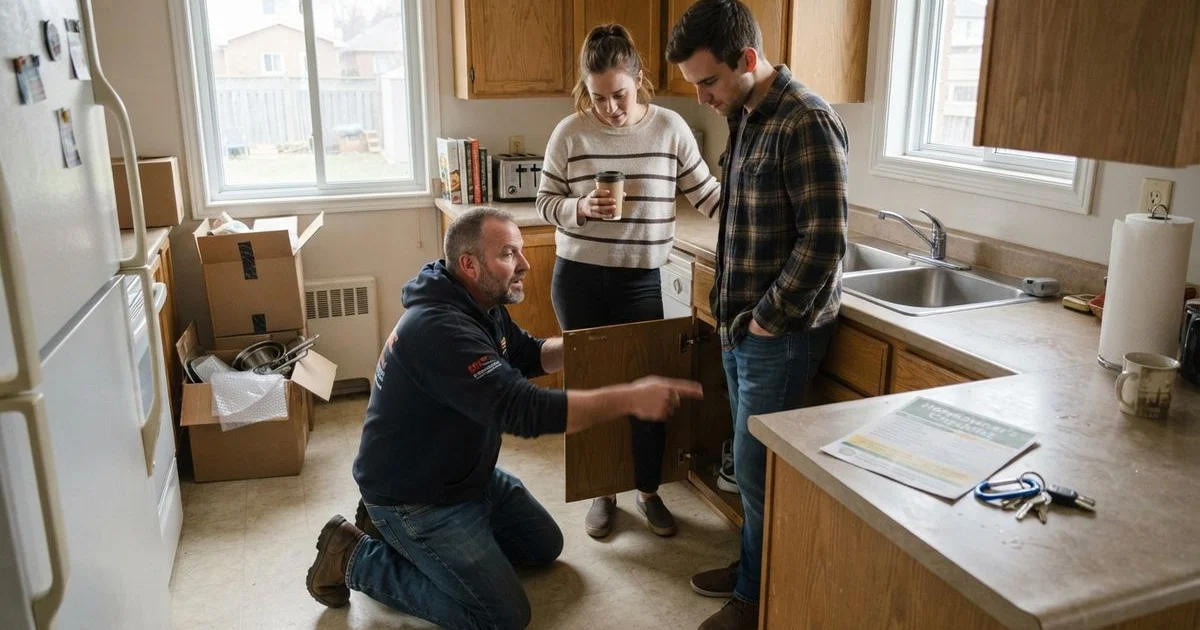
Owning a home means owning its plumbing, in a way renting never quite does. Nobody hands new homeowners a manual, so a few basics learned early save a lot of stress and money down the line, and most of them take less than an afternoon to sort out. If you’re coming from renting, the guide to plumbing responsibilities for Ontario renters is a useful before-and-after comparison for what changes once you own the pipes yourself.
The first thing to do after closing
Find your main water shut-off valve before you need it, not during an emergency. Walk the house and locate every fixture’s local shut-off too: under sinks, behind toilets, at the washing machine. Test that the main valve actually turns; a seized valve you discover during a flood is a genuinely bad time to find out it doesn’t work. If your home has a sump pump, confirm it’s operational, and note where the backwater valve is if the home has one.
Know what you’re working with
Ask during closing, or check yourself, what pipe material runs through the home and how old the water heater is. Homes built before the 1970s in Ontario sometimes still have original cast iron drain lines or galvanized supply pipes, both of which have a finite lifespan and are worth knowing about even if nothing’s wrong yet. A water heater’s age is usually printed on a sticker on the tank; units past 10 to 12 years are more likely to fail without much warning.
| To find out | Where to look | Why it matters |
|---|---|---|
| Pipe material | Home inspection report, or visible pipe in the basement | Older materials (galvanized, cast iron) age differently than PEX or copper |
| Water heater age | Sticker on the tank | Units past 10-12 years are higher failure risk |
| Main shut-off location | Usually near the water meter | Critical during any emergency |
| Sump pump presence and function | Basement, near the lowest point of the foundation | Prevents basement flooding during heavy rain or snowmelt |
| Backwater valve presence | Basement, on the main sewer line | Prevents sewage backup during municipal system overload |
Maintenance that actually matters
Not every plumbing task deserves equal attention. Flushing sediment from a water heater tank periodically extends its life. Checking under-sink cabinets for early signs of moisture catches small leaks before they become expensive ones. Knowing your water pressure, too high accelerates wear on fixtures and connections, too low is just annoying, is worth a quick check with an inexpensive gauge. Beyond that, most of what matters is paying attention: a slow drain, a running toilet, or a new sound from a pipe are all worth investigating promptly rather than waiting.
Seasonal habits worth building early
Ontario’s climate adds a few extra items to a first-time homeowner’s checklist that renters rarely think about. Disconnect and drain outdoor hoses before the first hard freeze, and know where the shut-off is for any outdoor tap. If the home has an irrigation system, it needs to be properly blown out and shut down for winter, a job many homeowners hire out the first year just to see how it’s done. Keep the area around your home’s exterior hose bibs and any exposed pipe in an unheated garage or crawl space in mind during a cold snap, since these are the most common spots for a frozen and eventually burst pipe in a typical Ontario winter.
Building a relationship with a plumber before you need one
Finding a plumber during an actual emergency means less time to compare quotes and more pressure to accept whatever’s offered. It’s worth having a plumber lined up in advance, even just from research, so that when something does go wrong, you’re calling someone you’ve already vetted rather than searching under stress. An annual check-in visit, covering the water heater and a general look at visible plumbing, is also a reasonable way to build that relationship before you actually need emergency help.
Browsing the Ontario Plumber Directory is a good starting point for finding licensed plumbers across every category covered here, and the methodology page explains how listings are ranked on real review signals like fair pricing, punctuality, and clear communication, the things that matter most once you’re the one calling.
FAQ
- What's the first plumbing thing I should do after moving in?
- Locate and test your main water shut-off valve and every fixture's local shut-off. Knowing this before anything goes wrong is the single most useful thing a new homeowner can do.
- How often should I actually have a plumber come out for maintenance?
- Once a year is a reasonable baseline for a general check, water heater inspection, and a look at anything showing early wear. Older homes or homes with known issues may warrant more frequent visits.
- What should I ask a home inspector to focus on for plumbing?
- The age and condition of the water heater, pipe material throughout the home, water pressure, and any signs of past leaks or water damage, especially in basements and around fixtures.
- Do I need to know anything about my home's specific pipe material?
- Yes, roughly. Knowing whether your home has copper, PEX, or older materials like galvanized steel helps you understand what maintenance or eventual replacement might look like, and it's worth asking about at closing if you don't already know.