Emergency plumbing: what to do first before help arrives
By Petra Vogel · Updated 2026-06-18
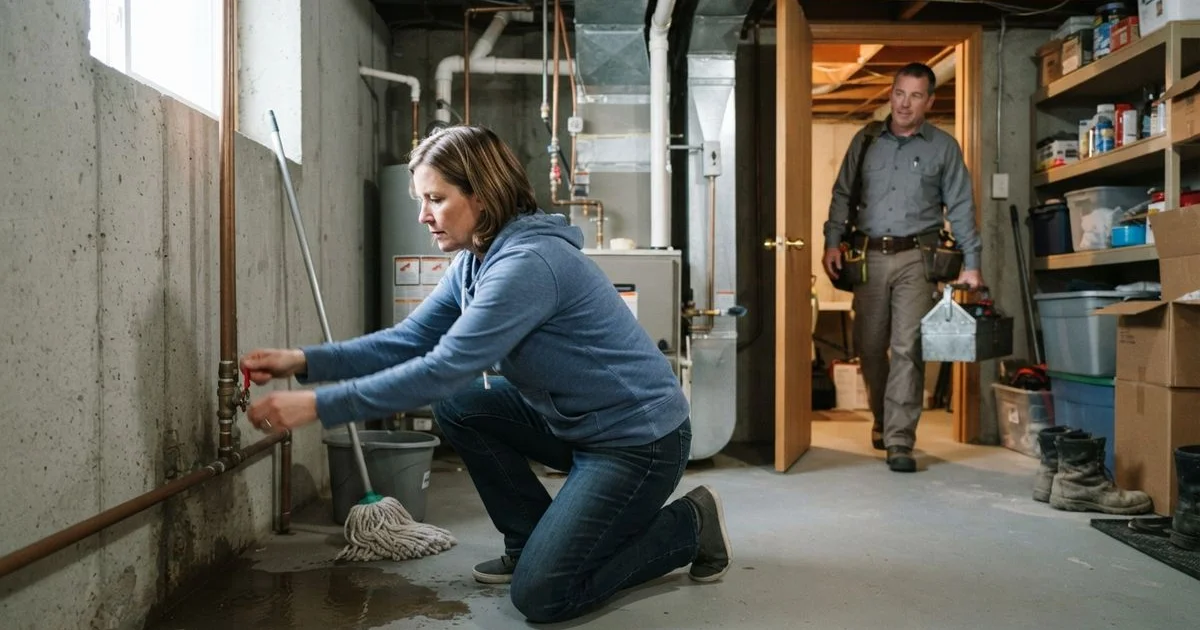
The first five minutes of a plumbing emergency matter more than almost anything a plumber does after arriving. Stopping the source of water, protecting people and belongings, and giving the plumber accurate information all happen before the truck is even in the driveway, and they matter regardless of which emergency plumber you end up calling.
Shut off the water first
Every home has a main shut-off valve, and most fixtures (toilets, sinks, washing machines) have their own local shut-off too. If you can identify which one feeds the problem, use that first since it’s faster and leaves water running to the rest of the house. If you can’t tell, or the leak is severe, shut off the main valve. Knowing where this valve is before anything goes wrong is the single most useful thing a homeowner can do to limit damage.
What to do while you wait
- Cut power to wet areas. If water is near outlets, a panel, or appliances, shut off the breaker for that zone if it’s safe to reach. Never step into standing water to get to a breaker panel.
- Move belongings up and out. Get furniture, boxes, and electronics off the floor and away from the affected area. Water travels farther and faster than it looks like it will.
- Contain what you can. Towels, buckets, and a wet/dry vacuum slow the spread while you wait. Don’t use a household vacuum not rated for water.
- Photograph the damage. A few phone photos before cleanup starts make an insurance claim much easier later, if you end up filing one.
- Ventilate if you smell gas. A rotten-egg smell near an appliance is different from a water emergency: leave the area, don’t flip switches or light anything, and call from outside the home.
Information to have ready when you call
A plumber can triage faster, and often arrive better prepared, when you can answer a few quick questions: where the water is coming from (or where you shut it off), whether it’s clean water or sewage, how long it’s been running, and whether anyone in the home has already tried a repair. If you have the make of your water heater or the age of the home handy, that helps too, but don’t delay the call to go find it.
| Situation | Shut off | Call urgency |
|---|---|---|
| Burst supply pipe, active flooding | Main valve, immediately | Same hour |
| Sewage backing up through a drain | Avoid using any drains; main valve if backup is worsening | Same hour |
| Water heater leaking steadily | Valve on the heater’s cold inlet line | Same day |
| Slow drip under a sink | Local shut-off under the fixture | Regular appointment |
| No hot water, no visible leak | None needed | Regular appointment, not urgent |
After the water is off
Once the immediate risk is under control, the goal shifts to getting a plumber out quickly without paying more than the situation calls for. Overnight and holiday call-outs typically cost more than a same-day daytime visit, so if the leak is contained and not actively spreading, it’s reasonable to ask whether the job can wait a few hours for standard rates. If it can’t (active flooding, sewage, no way to safely shut off water to the home), that’s exactly what emergency service exists for.
Response-time signals from real reviewers, not just star ratings, are part of how listings are ranked; how that scoring works is explained on the methodology page. The Ontario Plumber Directory homepage is a good starting point for browsing licensed plumbers by area once the immediate risk is handled.
A calm, contained emergency is a far better starting point for the plumber than one where damage is still spreading, so the steps above are worth having memorized, or printed and stuck to the inside of a utility closet door, before you ever need them.
It’s also worth doing a five-minute walkthrough of your own home now, while nothing is wrong. Confirm where the main shut-off is, check that the handle actually turns without a wrench or WD-40, and make sure everyone in the household knows where it is too. A shut-off valve that’s seized in place is a problem you only discover at the worst possible moment.
FAQ
- Where is my main water shut-off valve?
- In most Ontario homes it's near the water meter, often in the basement close to where the main line enters, or in a utility closet. Find it before an emergency happens, not during one.
- Should I still call an emergency plumber if I've stopped the leak myself?
- Usually yes. Stopping the flow buys time, it doesn't fix the broken part, and pipes that failed once are worth having inspected before they fail again.
- Is it safe to use electrical outlets near standing water?
- No. Shut off power to any affected area at the breaker if you can reach it safely, and don't touch outlets, switches, or appliances in or near standing water.
- What counts as a real plumbing emergency versus something that can wait?
- Active flooding, a burst pipe, sewage backing up into the home, or a gas smell are emergencies. A slow drip or a slow drain can usually wait for a regular appointment.